






Tile Maintenance Guide: How to Keep Tiles Looking New in Nepal
A proper tile maintenance guide for homes in Nepal starts with three basic habits: remove loose dust regularly, mop with clean water and a mild tile-compatible cleaner, and deal with spills before they dry. Ceramic and vitrified tiles are generally easy to maintain, but abrasive scrubbers, excessive cleaner, dirty mop water, and unsuitable chemicals can gradually affect their appearance.
Nepal’s dusty dry months, muddy monsoon conditions, kitchen grease, bathroom moisture, and frequent foot traffic can all leave tiles looking dull when cleaning is delayed.
The easiest way to keep tiles looking new is therefore consistent rather than aggressive cleaning. Use soft cleaning tools, keep grout clean, dry wet areas properly, and adjust the cleaning method according to the tile surface and finish.
Why Is Regular Tile Maintenance Important in Nepal?
Tiles are chosen for homes because they are durable and relatively easy to clean, but low maintenance does not mean no maintenance.
Dust and fine grit carried indoors on footwear can settle on floors. If they remain there while people walk over them, they can behave like abrasives against the surface. During the monsoon, mud and moisture can create another cleaning problem, particularly around entrances, balconies, kitchens, and bathrooms.
Kitchen floors and walls have different challenges. Cooking oils, food spills, and vapour can gradually form a layer of residue. Bathrooms regularly deal with soap residue, standing water, moisture, and mineral deposits.
Good floor tile maintenance prevents these small problems from becoming stubborn cleaning jobs.
For most ceramic surfaces, routine cleaning with suitable household or tile cleaners is enough, while abrasive materials should be avoided. Manufacturers also recommend removing cleaner residue thoroughly and testing unfamiliar cleaning products on a small area before wider use.
How to Clean Tiles for Regular Maintenance
If you are wondering how to clean tiles without damaging the surface, start with the least aggressive method.
1. Remove Loose Dust and Dirt First
Sweep the floor using a soft-bristled broom or use a vacuum suitable for hard floors.
Do this before wet mopping.
When loose dust becomes wet, it can turn into dirty residue that gets pushed across the floor and into grout lines. Removing it first makes mopping more effective.
Homes near busy roads, construction areas, open plots, or frequently used entrances may need sweeping more often.
2. Mop With Clean Water and a Mild Cleaner
For routine cleaning, use:
- Clean water
- A microfiber or soft mop
- A mild tile-compatible cleaner when required
- A separate clean cloth for drying or spot cleaning
Glazed ceramic tiles can generally be cleaned with water or a pH-neutral liquid cleaner. Starting with a mild cleaning method also reduces the risk of damaging the finish.
Avoid pouring concentrated cleaner directly onto the floor unless the product instructions specifically recommend it.
3. Change Dirty Mop Water
One overlooked part of how to keep floor tiles clean is simply changing the water.
Once mop water becomes visibly dirty, replace it.
Continuing to mop with dirty water can redistribute soil over the surface and into grout lines. This can leave the floor looking hazy even after it has just been cleaned.
4. Rinse Away Cleaning Residue
Using too much detergent can create a film over tiles.
If the surface feels sticky or looks streaky after cleaning, mop it again using clean water. Tile-care guidance recommends thoroughly removing cleaner residue because remaining residue can affect both appearance and surface performance.
5. Let the Floor Dry Properly
Allow natural ventilation or wipe the surface using a clean microfiber cloth.
Drying is particularly useful on glossy tiles and in homes where water leaves visible mineral marks after evaporation.
Simple Floor Tile Maintenance Schedule
Tile care becomes easier when it is divided into regular tasks rather than saved for occasional deep cleaning.
Daily or As Needed
Sweep or vacuum areas that receive regular traffic.
Immediately wipe:
- Tea and coffee spills
- Cooking oil
- Food
- Mud
- Standing water
- Sauces and coloured liquids
Entrance areas and kitchens generally require more frequent attention than bedrooms.
Weekly
Mop regularly used floor areas with clean water and a suitable mild cleaner.
Pay additional attention to:
- Kitchen floors
- Bathroom floors
- Entrance areas
- Dining spaces
- Balconies
- Frequently used corridors
You can browse the different applications under Kajaria Ramesh’s floor tiles collection when identifying the type of floor surface being maintained.
Monthly or Periodically
Inspect less obvious areas such as corners, grout joints, spaces beneath movable furniture, and areas close to bathroom fittings.
A periodic deeper clean can remove residue that routine mopping may miss. The required frequency depends on traffic, room use, and how quickly dirt accumulates.
Ceramic Tile Maintenance: What Should You Do?
Ceramic tile maintenance is relatively straightforward when the surface is cleaned consistently.
Kajaria Ramesh includes ceramic tiles among its main tile categories, with ceramic products used across wall and appropriate floor applications. Ceramic tiles differ from denser vitrified tiles, so knowing what has been installed is useful before choosing stronger cleaning products.
You can view the ceramic tiles collection for reference.
For regular ceramic tile care:
- Sweep or vacuum loose particles.
- Mop using clean water and a mild tile-compatible cleaner.
- Use a microfiber cloth or soft mop.
- Rinse away excess cleaner.
- Remove spills quickly.
- Avoid metal scrubbers and highly abrasive pads.
- Test unfamiliar stain removers in an inconspicuous area first.
For glazed ceramic wall tiles, a soft damp cloth is often enough for routine dust or splash marks.
The main goal is to avoid unnecessarily aggressive cleaning when a mild method will work.
How Should Vitrified Tiles Be Maintained?
Vitrified tile maintenance follows many of the same basic principles, but the finish requires consideration.
Kajaria have both glazed vitrified tiles and heavy-duty vitrified tiles. The glazed vitrified collection includes large-format and high-gloss options, while the heavy-duty range is intended for areas exposed to greater footfall and wear.
For Glossy and High-Gloss Vitrified Tiles
Use soft tools and remove dust before mopping.
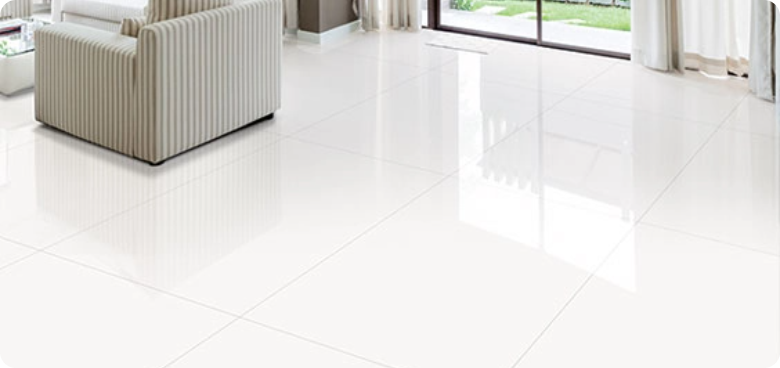
Fine surface marks, detergent film, and dried water spots can be more visible on reflective finishes. After cleaning, rinse with clean water and dry with a microfiber cloth where necessary.
Avoid trying to create additional shine with wax or oily cleaners. Such products can leave surface residue and may make floors slippery.
For Matt or Textured Vitrified Tiles
Textured surfaces can trap dirt within the surface pattern.
Sweep thoroughly before mopping. If residue remains within textured areas, gently agitate it using a soft nylon brush and a compatible cleaner instead of reaching immediately for a harsh chemical or metal scrubber.
How to Maintain Kitchen Tiles
Kitchen tiles deal with grease, food, spills, and frequent cleaning.
Kajaria Ramesh has separate kitchen floor tiles and kitchen wall tiles ranges, reflecting the different demands placed on horizontal and vertical surfaces.
Useful tile cleaning tips for kitchens include:
- Wipe oil before it spreads.
- Remove food spills soon after they occur.
- Clean backsplash areas regularly instead of waiting for grease to build up.
- Avoid excessive detergent because it can leave a sticky film.
- Rinse the surface after using a cleaner.
- Keep grout around cooking areas free from grease accumulation.
For stubborn grease, use a tile-compatible degreasing cleaner according to its instructions rather than using highly concentrated chemicals without checking compatibility.
How to Maintain Bathroom Tiles
Bathrooms require more moisture control than most other rooms.
The bathroom floor tiles collection on the site includes matt, glossy, and high-gloss finishes, with matt finishes particularly relevant where additional grip is required in wet spaces.
To maintain bathroom tiles:
- Remove standing water where possible.
- Keep the room ventilated.
- Wipe frequently wet wall areas with a squeegee or microfiber cloth.
- Clean soap residue before it develops into a thick layer.
- Pay attention to corners and grout joints.
- Keep floor drains functioning properly.
- Use bathroom cleaners that are confirmed as compatible with the installed tile and grout.
Regular moisture removal also helps reduce the conditions that encourage mildew around grout and corners. Tile manufacturers recommend monitoring damp bathroom areas and cleaning early rather than allowing buildup to become established.
How to Clean Tile Grout Without Damaging It?
Clean tiles can still look old when the grout has become dark or stained.
Start by removing surface dirt with warm water and a soft grout brush.
If additional cleaning is necessary, choose a grout-compatible cleaner and follow the dilution and contact-time instructions on the product.
Avoid using wire brushes. Aggressive brushing can gradually damage cement-based grout joints.
Grout may also require periodic sealing depending on the type of grout and installation. Not every grout requires the same treatment, so check the installation or sealer manufacturer’s recommendations before applying a sealer.
Tile Stain Removal: What Should You Do?
Successful tile stain removal depends on what caused the stain.
The first rule is to deal with the spill as quickly as possible rather than allowing it to dry.
Tea, Coffee and Food Marks
Blot away the spill first.
Clean the area with warm water and a small amount of mild cleaner. Rinse afterwards with clean water.
If the stain remains, use a product suitable for the specific tile finish rather than increasing scrubbing pressure.
Oil and Grease
Absorb excess oil with a clean cloth or paper towel.
Use a compatible tile cleaner or degreaser, allow it to work according to its instructions, gently wipe the area, and rinse well.
Avoid spreading the oil across a larger part of the floor while cleaning.
Mud
Allow heavy mud to be removed carefully before wet cleaning.
Sweep or lift off loose material first, then mop the remaining marks with clean water and mild cleaner.
This method is particularly useful during Nepal’s monsoon season when mud is more easily carried through entrances.
Soap and Mineral Marks
Bathroom tiles can develop cloudy residue from soap and, depending on local water conditions, mineral deposits.
Start with a tile-safe cleaner and a non-abrasive cloth.
Do not automatically use vinegar, lemon juice, toilet cleaner, or another acidic product simply because it appears in a household cleaning tip online. Cleaner compatibility varies by tile, finish, grout, and surrounding materials.
Tile Cleaning Mistakes That Can Make Floors Look Older
Learning how to maintain tiles also means knowing what not to do.
Using Steel Wool or Metal Brushes
These can scratch tile surfaces and damage grout.
Use microfiber, soft nylon brushes, or non-abrasive pads instead.
Using Too Much Cleaning Product
More cleaner does not necessarily mean a cleaner floor.
Excess detergent may remain as a film that attracts additional dirt or creates streaks.
Using Toilet Cleaner as a Floor Cleaner
Toilet cleaners are formulated for a different purpose and some contain strong acidic ingredients.
They should not be used as a routine ceramic or vitrified floor cleaner unless the tile and cleaning-product manufacturers specifically confirm compatibility.
Mixing Cleaning Chemicals
Never mix household cleaning chemicals in an attempt to create a stronger tile cleaner.
Use one suitable product according to its label instructions.
Dragging Furniture Across Tiles
Heavy furniture can mark surfaces or damage tile edges.
Use felt or rubber furniture pads and lift furniture where practical rather than dragging it.
Leaving Spills Until Later
Tea, coffee, food colouring, oils, and muddy water are easier to remove when addressed quickly.
How Can You Prevent Tile Scratches and Everyday Damage?
Cleaning is only part of tile maintenance.
Several preventive habits reduce the amount of cleaning and repair required later.
Place doormats at main entrances to capture dust and grit before they reach tiled floors.
Use protective pads under chairs, tables, sofas, and other frequently moved furniture.
Avoid dropping heavy objects on tile edges.
In kitchens, clean liquids quickly to reduce both staining and slipping risk.
In wet areas, keep water from sitting unnecessarily around corners and grout joints.
These measures are particularly useful for wall tiles and floor surfaces that you want to retain in good condition for many years.
Does Tile Finish Change the Cleaning Method?
Yes. A glossy finish, matt finish, and textured surface can respond differently to the same cleaning routine.
Glossy Tiles
Glossy surfaces show streaks and dried water marks more easily.
Use a clean mop, avoid excessive detergent, rinse well, and dry when necessary.
Matt Tiles
Matt surfaces hide some streaking but may retain fine dirt if the surface has texture.
Use a soft brush where required rather than abrasive scrubbing.
Textured Tiles
Textured flooring may need cleaning from different directions so the mop or brush reaches shallow surface patterns.
A soft nylon brush can help loosen dirt in areas a flat mop cannot reach.
Why Choose Kajaria Tiles for Easier Maintenance?
Choosing the right tile from the beginning can make everyday cleaning and long-term maintenance much easier. Kajaria Ramesh offers ceramic and vitrified tile options for different areas of the home, allowing homeowners to select tiles according to room use, traffic, moisture exposure, and required finish.
Ceramic tiles can be a practical option for walls and are suitable for residential applications because they are relatively easy to clean with regular care. For areas exposed to heavier foot traffic, vitrified tiles can provide the durability needed while still supporting a simple maintenance routine.
The key is to choose the tile according to where it will be installed rather than design alone. Matching the tile type and finish with the space helps reduce staining, excessive wear, and frequent deep cleaning, making it easier to keep tiles looking new over time.
Conclusion
Keeping tiles looking new mainly comes down to regular cleaning, using the right products, and preventing dirt, moisture, and stains from building up. Simple habits such as sweeping before mopping, changing dirty water, cleaning spills quickly, maintaining grout, and avoiding abrasive tools can make ceramic and vitrified tiles easier to care for over time.
A good tile maintenance guide should also consider the tile type, finish, and area where it is installed. By following suitable cleaning methods for kitchens, bathrooms, floors, walls, glossy surfaces, and textured tiles, homeowners in Nepal can maintain a clean appearance while reducing the need for frequent deep cleaning or avoidable repairs.
FAQs About Tile Maintenance
1. How do I make tiles look new again?
Start by removing loose dust, then mop with a mild tile-compatible cleaner using clean water. Rinse away detergent residue and dry the surface if water marks remain. Clean the grout separately if it is making the tiled area appear dirty. If dullness is caused by permanent scratches or surface damage, cleaning alone may not restore the original finish.
2. How often should floor tiles be cleaned?
Sweep or vacuum according to the amount of dust and traffic in the room. Frequently used areas may need attention daily, while mopping can usually be done weekly or whenever dirt becomes visible. Kitchens, bathrooms, and entrances often require more frequent cleaning.
3. Can I use Harpic or toilet cleaner on tiles?
It is better not to use toilet cleaner as a general tile-cleaning product. Some toilet cleaners contain strong acids that may affect grout or certain tile finishes. Use a cleaner intended for the installed tile type and follow the manufacturer’s instructions.
4. What is the best way to clean ceramic tiles?
For routine ceramic tile maintenance, remove loose dust first and then clean the surface with water or a mild tile-compatible cleaner using a soft mop or cloth. Rinse away residue and avoid abrasive scrubbers.
5. Why do my tiles look dull after mopping?
Dirty mop water, too much detergent, or cleaner residue can leave a cloudy film. Mop again with fresh clean water and dry with a microfiber cloth. If the dullness remains, check whether it is caused by scratches, mineral buildup, or damage to the surface finish.