


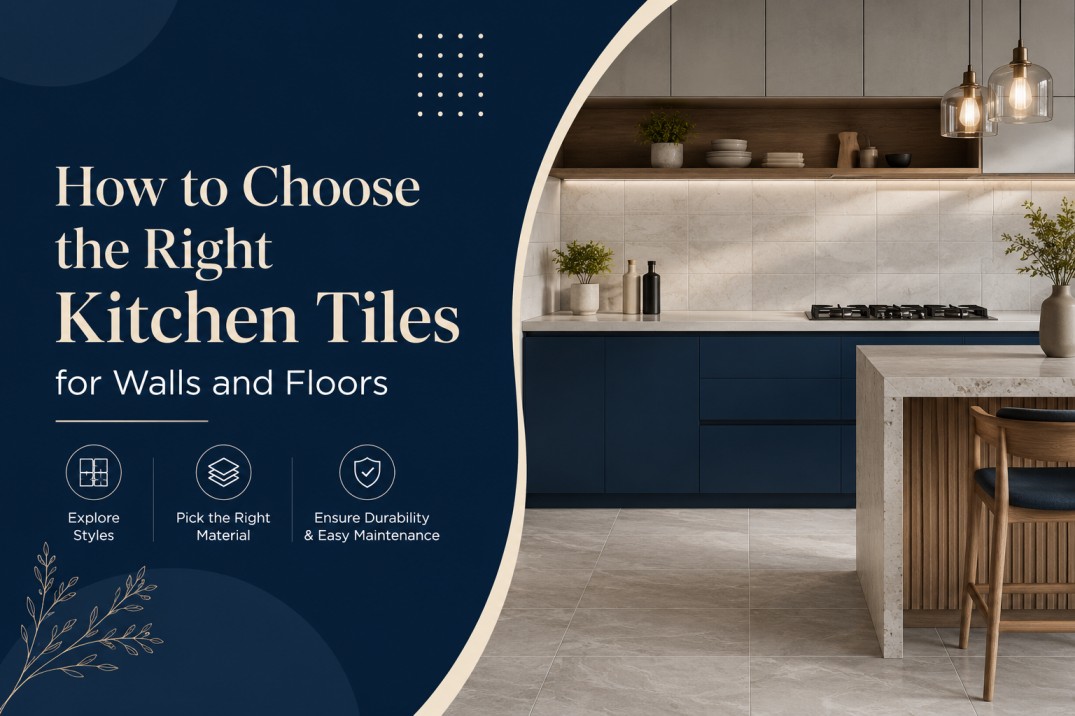
How to Choose the Right Kitchen Tiles for Walls and Floors
How to Choose the Right Kitchen Tiles for Walls and Floors
Your kitchen endures heat, moisture, spills, and heavy foot traffic every single day. Yet many homeowners across Nepal invest deeply in modular cabinets and appliances, only to underestimate the single surface that ties everything together: the tile. Choosing the right kitchen tiles for walls and floors is not merely a design decision, it is a long-term investment in hygiene, safety, and durability.
If you have stood in a tile showroom in Kathmandu feeling overwhelmed by hundreds of options ceramic, vitrified, matte, glossy, 60×60, 60×120 you are not alone. Which tile is safe enough for a wet kitchen floor? What finish works best on walls? How much should you spend per square foot?
This guide answers all of that, built specifically for Nepal’s homeowners. By the end, you will know exactly how to choose the right kitchen tiles for walls and floors and where to find them.
Why Choosing the Right Kitchen Tiles Matters More Than You Think
Beyond aesthetics, the right kitchen tiles for walls and floors directly affect three practical realities in every Nepali home:
- Safety: Nepal’s monsoon season brings relentless humidity. A slippery kitchen floor in a wet climate is a serious hazard, especially for children and elderly family members.
- Hygiene: Kitchens generate grease, steam, and food residue. Only tiles with the right surface finish resist bacteria and stain absorption.
- Durability: Joint families and multi-generation households in Nepal mean kitchens experience far higher foot traffic than average. Choosing a tile rated for that intensity prevents premature chipping and cracking.
Understanding these stakes is what separates a smart tile purchase from an expensive regret.
Understanding Tile Types: The Foundation of Every Good Decision
Before you evaluate colour or design, you need to understand tile materials because material determines everything else: durability, cost, suitability for floors vs. walls, and maintenance effort.
Ceramic Tiles
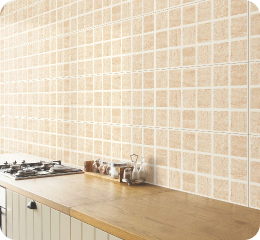
Ceramic tiles are made from natural clay fired at high temperatures. They are the most affordable and most widely available tile type in Nepal, with prices typically starting from NPR 140 per sq ft. Ceramic tiles are excellent for kitchen walls where they handle heat splatter and moisture beautifully. However, they are softer than vitrified tiles and carry a higher water absorption rate, making them less ideal for high-traffic kitchen floors.
Best use: Kitchen walls, backsplash areas, and light-traffic residential kitchens.
Glazed Vitrified Tiles (GVT)
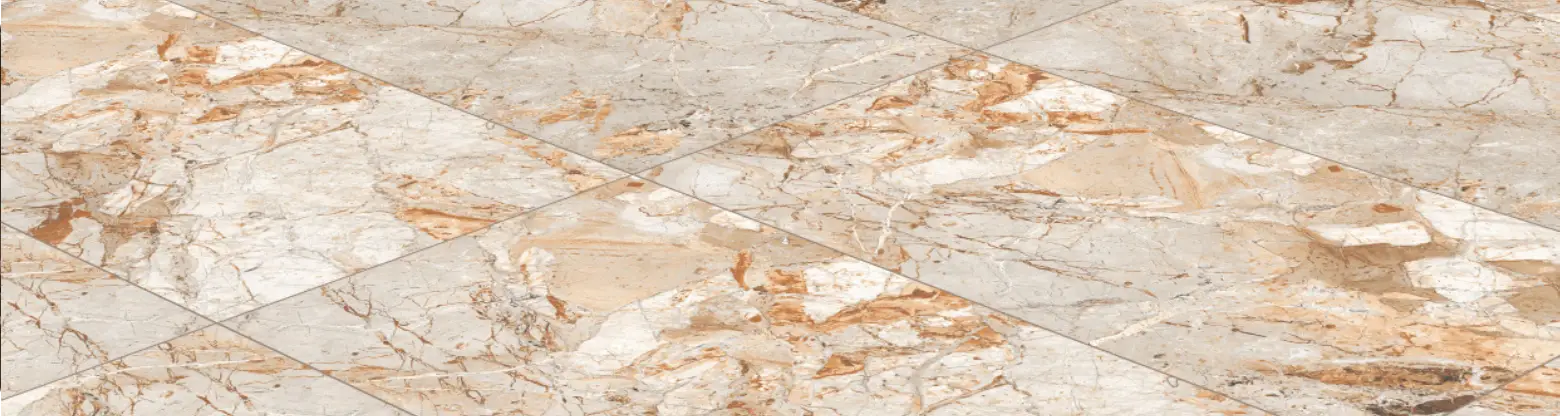
Glazed Vitrified Tiles commonly called GVT are the gold standard for kitchen floors in Nepal in 2026. They are fired at extremely high temperatures, resulting in a tile that is denser, harder, and far less porous than standard ceramic. Their water absorption rate is under 0.5%, making them genuinely waterproof a critical quality for a space as damp as a kitchen. Kajaria Ramesh produces a comprehensive range of GVT tiles specifically engineered for kitchen floor applications, available in both matte and gloss finishes, across sizes from 40×40 cm up to the large-format 60×120 cm option.
Best use: Kitchen floors, heavily used cooking areas, joint-family homes, and any kitchen prone to water splashes.
Heavy Duty Vitrified Tiles (HDVT)
For commercial kitchens, home restaurants, and large joint families where the kitchen sees relentless daily use, Heavy Duty Vitrified Tiles are the strongest option available. These tiles are thicker (typically 10–12 mm), harder, and built to resist chips and cracks under extreme load. If your household cooks three meals a day for twelve people, HDVT is your tile.
Digital Wall Tiles
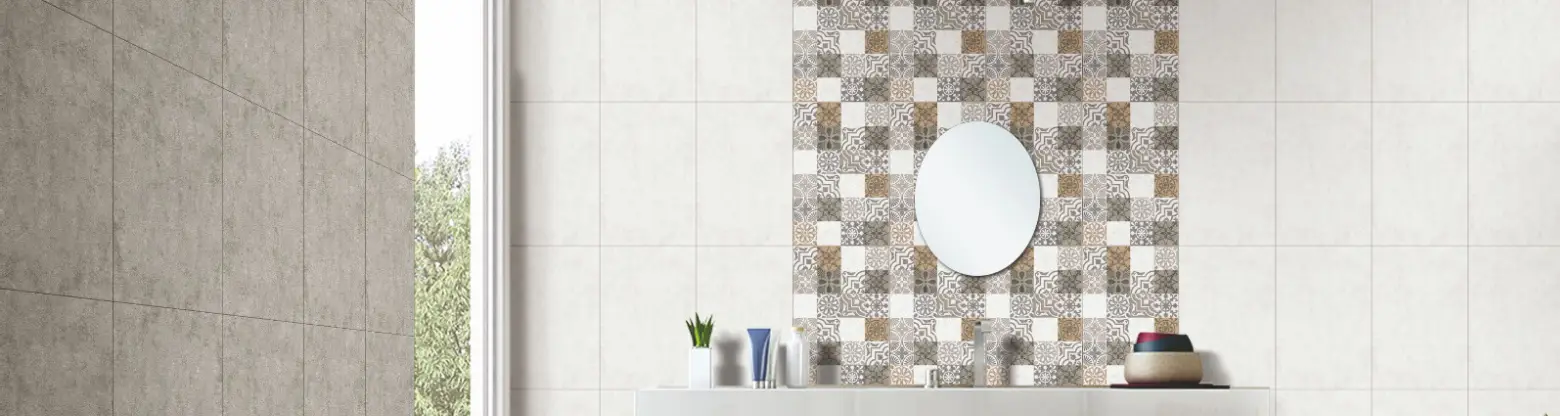
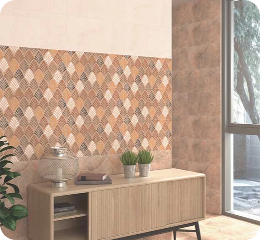
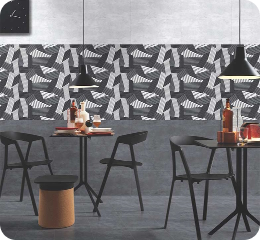
Digital Wall Tile are ceramic or porcelain-based tiles printed using high-resolution digital technology, allowing for virtually unlimited design possibilities from realistic marble veining to geometric patterns, wood effects, and traditional Nepali motifs. They are ideal for backsplash areas and kitchen feature walls.
TILE COMPARISON TABLE
| Tile Type | Best For | Water Resistance | Price Range (NPR/sq ft) |
| Ceramic | Kitchen Walls | Medium | 140 – 210 |
| Glazed Vitrified (GVT) | Kitchen Floors | High | 200 – 260 |
| Heavy Duty Vitrified | Commercial/Heavy Use | Very High | 220 – 260 |
| Digital Wall Tiles | Backsplash / Feature Walls | High | 160 – 240 |
Matte vs. Glossy: Choosing the Right Surface Finish
One of the most consequential and most debated decisions when selecting the right kitchen tiles for walls and floors is the surface finish. The choice between matte and glossy affects both the look and the practical performance of your kitchen.
Matte Finish Tiles
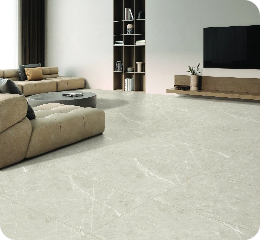
Matte tiles have a non-reflective, flat surface that gives kitchens a natural, earthy, and sophisticated feel. More importantly, the slightly textured surface of quality matte tiles provides natural grip underfoot, making them significantly more slip-resistant than their glossy counterparts.
For kitchen floors in Nepal where wet conditions during cooking and cleaning are a daily reality matte finish, GVT tiles in sizes like 60×60 cm or 60×120 cm are the most recommended choice by interior designers and tile experts alike..
Glossy Finish Tiles
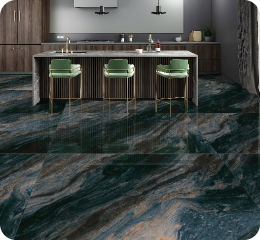
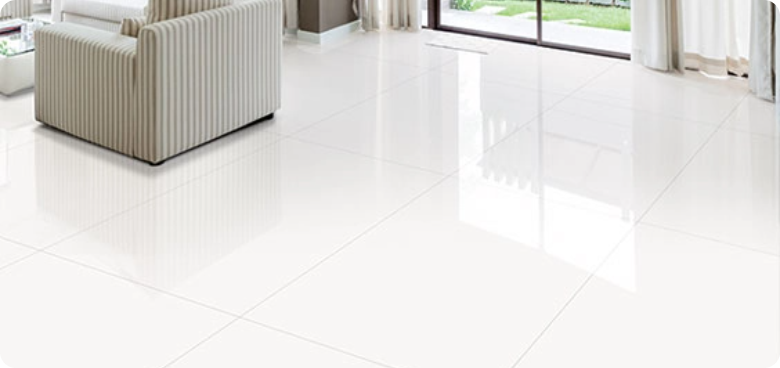
Glossy tiles have a mirror-like surface that reflects light beautifully, creating an effect of depth and brightness. In small kitchens with limited natural light a very common scenario in urban apartments across Kathmandu a glossy wall tile can visually double the perceived space by bouncing light around the room.
Glossy tiles are the ideal choice for kitchen walls and backsplash areas, where slip resistance is not a concern and easy cleaning is a priority. A glossy wall surface wipes completely clean with a single swipe, making it the most hygienic surface finish available for the area behind your stove and sink.
Read our blog on glossy vs matte kitchen tiles if you want to know more.
Tile Size Guide: How Size Changes the Feel of Your Kitchen
Tile size has a profound effect on how a kitchen feels. Many homeowners default to small tiles out of habit, unaware that size selection is one of the most powerful design tools available especially in Nepal’s typically compact urban kitchens.
- 60×120 cm Large Format Tiles: Counterintuitively, large format tiles make small kitchens look bigger. With fewer grout lines visible across the floor, the space reads as one continuous, seamless surface. These are increasingly the preferred choice for modern urban kitchens in Kathmandu and Lalitpur.
- 60×60 cm: The most versatile size in Nepal’s residential market. Suitable for both kitchen floors and larger walls, offering a balanced modern look without overpowering compact spaces.
- 30×60 cm and 30×45 cm: The classic choice for kitchen walls and backsplash areas. These sizes are proportional to wall heights in most Nepali kitchens and are available across a wide range of finishes and designs.
- Subway Tiles (10×30 cm): A timeless choice for kitchen backsplashes. The stacked or offset rectangular format creates a clean, classic look that pairs well with both modern and traditional kitchen cabinetry.
When choosing size, always consider the grout line effect: more grout lines mean more maintenance, as grout is porous and accumulates grime over time. Larger tiles equal fewer grout lines, which equals a cleaner, easier-to-maintain kitchen surface.
Safety First: Slip Resistance in Kitchen Tiles
Kitchen floors get wet. That is simply a fact of life in any functioning kitchen, and it demands serious consideration when selecting the right kitchen tiles for walls and floors. A slip on a wet kitchen floor can cause serious injury, particularly for elderly family members and young children.
When evaluating slip resistance, look for tiles with a higher R-value (a measure of surface roughness and friction):
- Matte and textured finish tiles provide better natural grip than polished or high-gloss tiles
- Anti-skid vitrified tiles are available for households with specific safety requirements
- For ground-floor kitchens that connect to outdoor courtyards common in traditional Nepali homes consider outdoor-grade anti-skid tiles with a higher R-value rating
- Tiles rated PEI 3 or above are recommended for kitchen floors to ensure they handle daily foot traffic and wet conditions without surface degradation
Kajaria Ramesh’s kitchen floor tile range is specifically curated to include options that meet safety standards for residential kitchen use in Nepal’s climate.
Wall Tiles vs. Floor Tiles: Key Differences You Must Know
A common and costly mistake Nepali homeowners make is assuming all tiles are interchangeable that a tile used on the wall can simply be flipped onto the floor. This is incorrect, and here is why:
- Thickness: Floor tiles are thicker (typically 8–12 mm) to withstand foot traffic and furniture weight. Wall tiles are lighter and thinner, making them easier to adhere vertically but unsuitable for floor loads.
- Surface Hardness: Floor tiles require a higher PEI hardness rating. Using a soft wall tile on a floor leads to scratching and surface wear within months.
- Slip Resistance: Floor tiles for kitchens should always carry a tested slip-resistance rating. Wall tiles are not manufactured with this requirement.
- Weight: Heavier floor tiles cannot always be safely applied to walls without specialist adhesives and wall preparation especially critical in Nepal’s seismic zone.
When browsing Kajaria Ramesh’s website, products are separated clearly into kitchen wall tiles and kitchen floor tiles this distinction is not arbitrary. It is an engineering and safety specification. Always choose tiles designed and tested for the surface you are covering.
How to Maintain Your Kitchen Tiles for a Lifetime of Performance
Even the finest tiles will underperform if neglected. Here are maintenance practices that will keep your kitchen tiles looking as sharp in ten years as they do on installation day:
- Daily: Sweep or dry-mop floor tiles to prevent grit from scratching the surface. Wipe wall tiles and backsplash with a damp cloth after cooking to prevent grease build-up.
- Weekly: Mop floor tiles with a pH-neutral tile cleaner. Avoid acidic cleaners like vinegar or bleach on glazed surfaces; they erode the glaze over time.
- Grout maintenance: Seal grout lines annually in high-moisture areas. Consider epoxy grout for the backsplash area behind your stove; it is completely stain-proof and requires no sealing.
- Seasonal: Check for any loose or cracked tiles, especially after Nepal’s earthquake season. A loose tile left unattended can cause water ingress into the substrate, leading to far more expensive structural damage.
Where to Buy the Best Tiles in Nepal: Kajaria Ramesh
Kajaria Ramesh Tiles Limited is Nepal’s premier tile brand, a joint venture between Ramesh Corp and Kajaria Ceramics, India’s largest tile manufacturer. With a production capacity of 5.2 million square metres annually, Kajaria Ramesh delivers world-class quality at locally competitive prices, making it the go-to destination for the best tiles in Nepal.
Here is why homeowners across Kathmandu, Pokhara, and Lalitpur trust them:
- Nepal’s only large-scale domestic tile manufacturer, ensuring consistent stock availability
- Prices range from NPR 140/sq ft (ceramic digital) to NPR 260/sq ft (HD Polished), covering every budget
- Tiles engineered for Nepal’s climate monsoon humidity, temperature variation, and seismic resilience
- Authorised dealers in Kathmandu, Bhaktapur, Lalitpur, Pokhara, and Biratnagar
- Winner of the NS Quality Award 2026
Conclusion: Make Your Kitchen the Room That Tells Your Story
A kitchen is where your family gathers, where aromas carry memories, and where daily life is nourished. Choosing the right kitchen tiles for walls and floors is one of the most impactful investments you will make in that space.
Key takeaways from this guide:
- Choose GVT or Heavy Duty Vitrified tiles for kitchen floors waterproof, durable, and safe
- Use ceramic or digital tiles for walls and backsplash cost-effective and easy to clean
- Matte finish for floors, glossy finish for walls
- Consider 60×120 cm large-format tiles to make your kitchen feel more spacious
- Budget NPR 140–260 per sq ft and always buy 10–15% extra for wastage
When you are ready to start, Kajaria Ramesh offers the most comprehensive range of kitchen tiles in Nepal, world-class quality, award-winning designs, and a showroom near you. Your kitchen transformation is one good decision away.
Frequently Asked Questions
1.Which tiles are best for kitchen floors in Nepal?
Matte-finish Glazed Vitrified Tiles (GVT) in 60×60 cm or 60×120 cm are the most recommended choice for kitchen floors in Nepal.
2.Can I use the same tile for kitchen walls and floors?
No. Wall tiles and floor tiles serve different engineering purposes. Floor tiles are thicker, harder, and slip-resistant.
3.Are matte or glossy tiles better for kitchen floors?
Matte tiles are better for kitchen floors due to superior slip resistance particularly important in Nepal’s humid kitchen environments. Glossy tiles are the superior choice for kitchen walls and backsplashes where easy cleaning and light reflection are the priorities.
4.How do I choose the right tile size for a small kitchen?
Counterintuitively, larger tiles (60×120 cm) make small kitchens appear bigger by creating fewer grout lines and a more seamless visual plane. If budget or installation constraints favour smaller tiles, 60×60 cm is the best all-round size for compact Nepali kitchens.